Eat & drink
The Bar
One room on the north side of the second courtyard, open from four in the afternoon until one in the morning. The counter is bronze, the back bar is seven bays deep, and every pour on this page is measured.
- Hours
- 16:00 — 01:00, daily
- Seats
- 48, of which 14 at the counter
- Back bar
- 7 bays, 412 bottles
- Cellar
- 640 references
The room
The drinking room
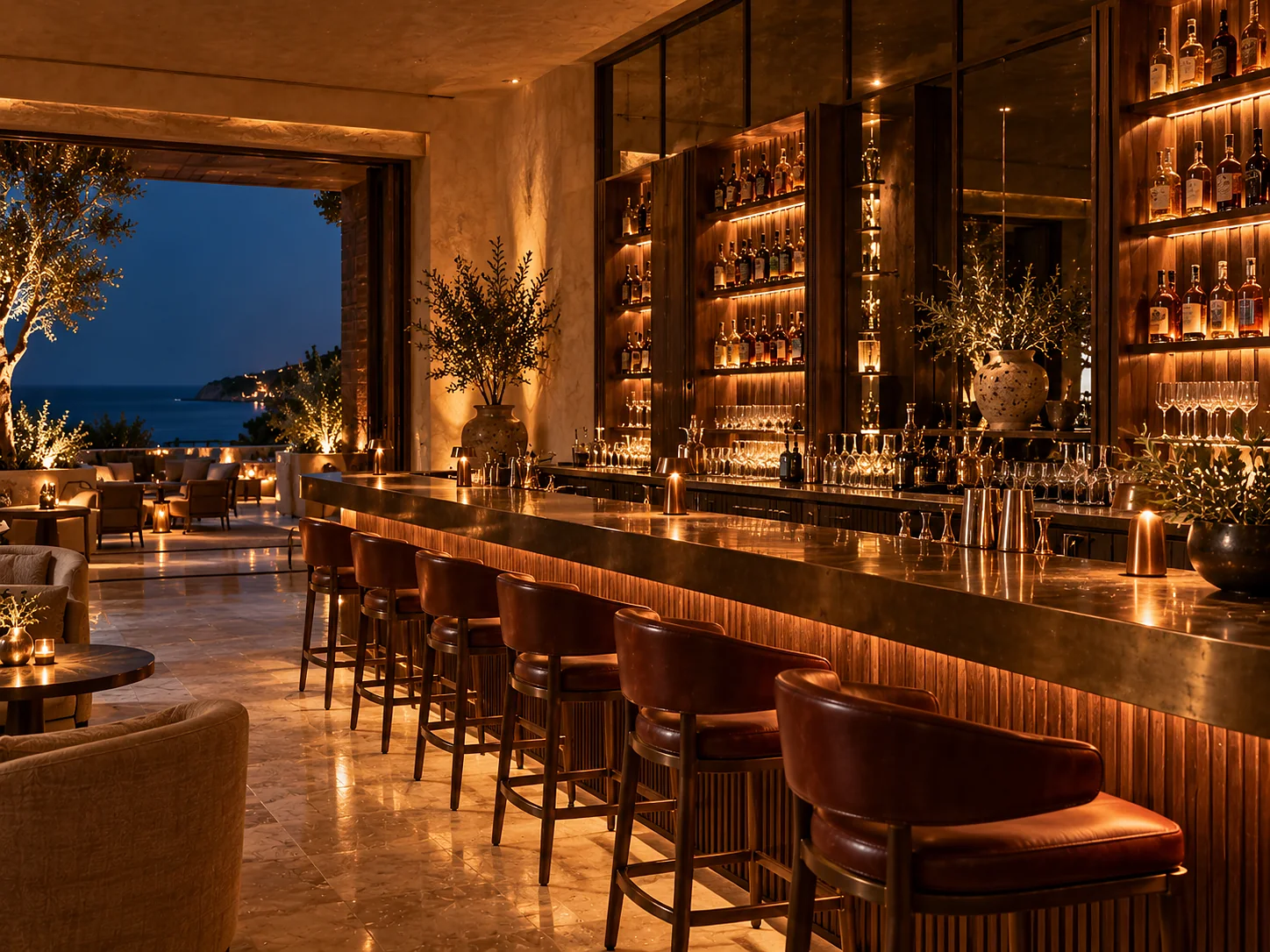
96 m² indoors and a 44 m² terrace, 11.4 metres of cast bronze counter, and a back bar of seven bays in dark walnut.
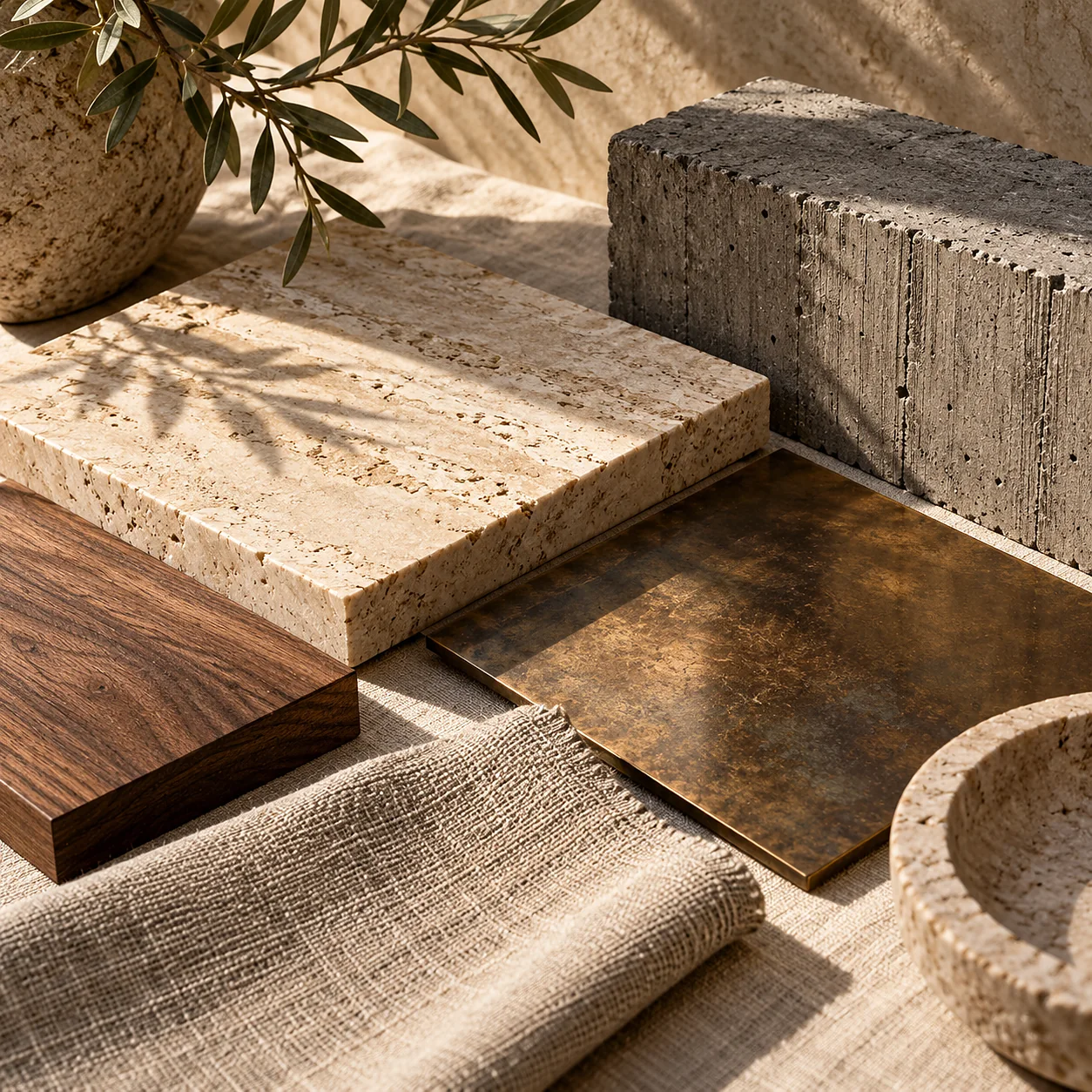
The bar faces away from the sea, on purpose. By four in the afternoon the Atlantic light on this coast comes in hard and low, and a room built to look straight into it is a room nobody can sit in for three hours. So the glazing faces east onto the courtyard and the reflecting pool, the west wall is solid lime-washed concrete 400 mm thick, and the only thing lit from the front is the back bar itself.
The counter is one casting of bronze, 11.4 m long and 60 mm thick, left unlacquered so that it darkens with handling. It is the single surface on the estate that is meant to change colour. Behind it stand seven bays of dark walnut, five shelves to a bay, thirty-five shelves holding 412 bottles. Under the counter run the ice bench, the freezer well at −18 °C, three wells and the carbonation line, all of it within one step of the stool you are sitting on.
Forty-eight people fit: 14 on oxblood leather stools along the counter, 22 in the room at low walnut tables, 12 on the terrace under the slatted pine canopy. The room is held at 22 °C and the music sits at 62 dB measured at the counter, which is the level at which two people can finish a sentence across a table without lifting their voices.
- 48
- seats, counter to terrace
- 14
- signature drinks, in four flights
- 412
- bottles across seven bays
- 640
- references in the cellar
Method
How a drink is built here
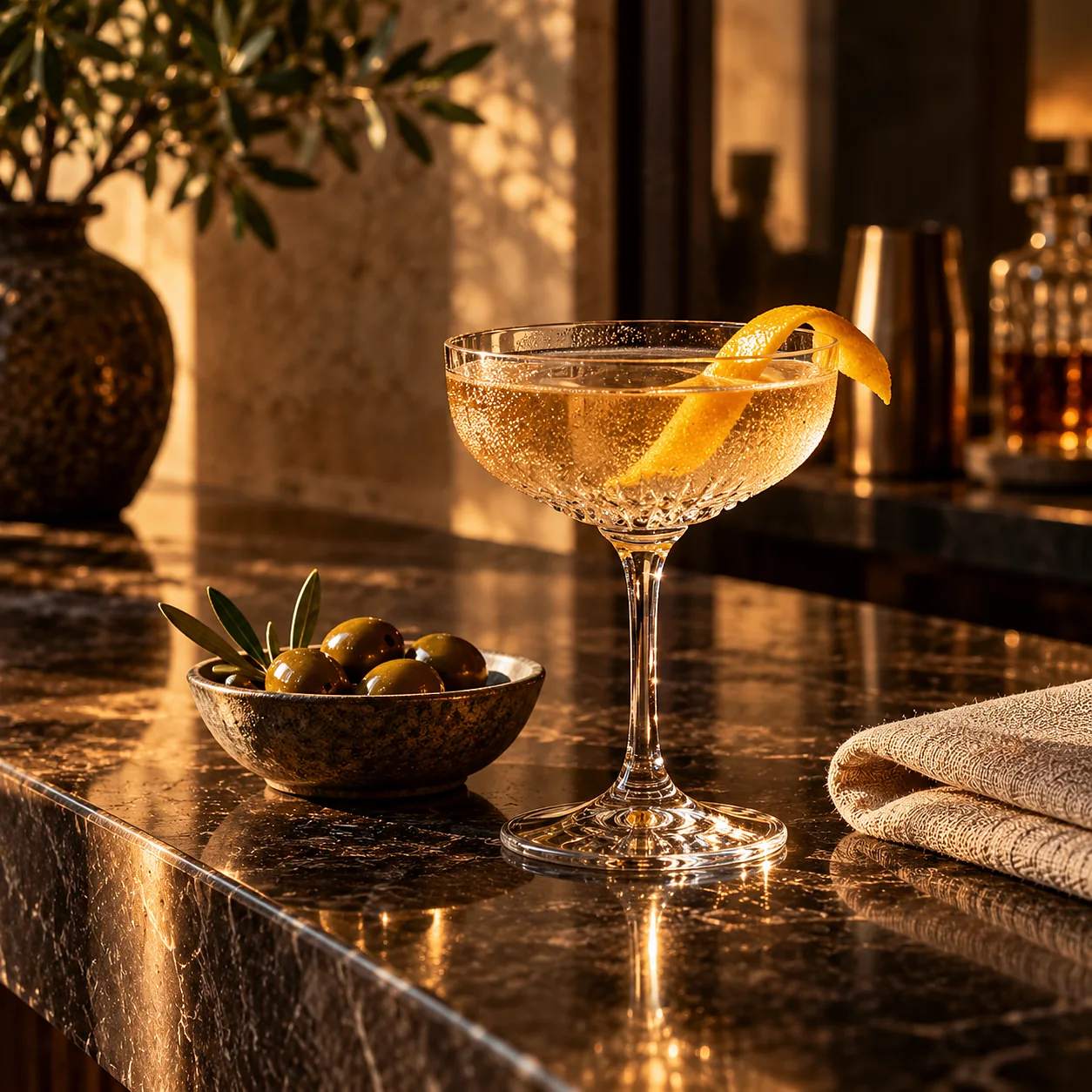
Every spirit is measured. The jigger is the recipe: 45 ml means 45 ml, and a build that reads 7.5 ml gets 7.5 ml, because the distance between a stirred drink that works and one that does not is about two millilitres of water.
Stirred drinks are taken to a target rather than to a count of turns — 12 to 16 % dilution, finishing at about −4 °C in the glass, which on cubes cut from the morning block takes between 30 and 40 seconds. Shaken drinks get 11 seconds with three 50 mm cubes and are poured through a fine strainer. Coupes, tumblers and stemmed glasses come out of a cabinet held at 2 °C.
The cordials, syrups, ferments and clarifications on this list are made in the room behind the bar: the fig-leaf syrup from leaves cut on the estate, the kombucha on a seven-day first ferment and a four-day second, the milk punches clarified over six hours. Each one has a written ingredient sheet, and those sheets are the reason the drinks without alcohol cost very nearly what the drinks with alcohol cost.
- Pours of 25, 35, 45 and 50 ml, jiggered, never free-poured
- Three ice formats — a 50 mm cube, a 300 g column, and crushed — all cut from one 12 kg block each morning
- House soda carbonated to 5.5 g per litre at 4 °C
- Glassware out of the cabinet at 2 °C
- Stirred
- −4 °C, 12–16 % dilution
- Shaken
- 11 seconds, three cubes
- Block
- 12 kg, cut daily
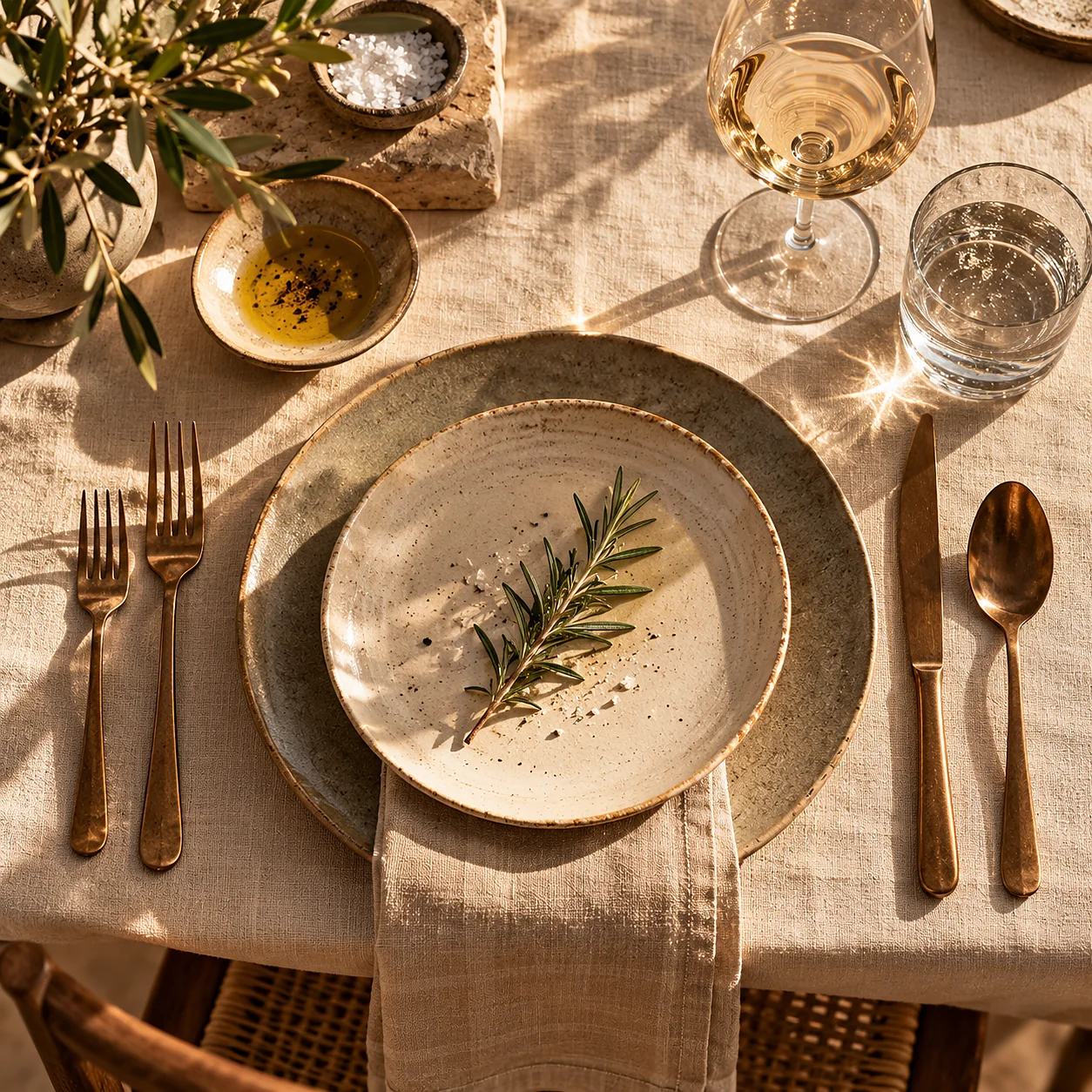
Exact
Measures, glassware and ice
Published because a drinks list that gives millilitres and then says nothing about the vessel has only told you half the recipe.
| Format | Volume | Used for | Served with |
|---|---|---|---|
| Jigger pour | 25 · 35 · 45 · 50 ml | every spirit measure on this page | jiggered to the millilitre |
| Coupe | 150 ml | stirred and shaken drinks served without ice | glass out of the cabinet at 2 °C |
| Nick & Nora | 140 ml | stirred aromatic drinks | glass at 2 °C |
| Rocks | 300 ml | drinks built over a single piece of ice | one 50 mm clear cube |
| Highball | 350 ml | long carbonated drinks | one 300 g hand-cut column |
| Tumbler | 280 ml | crushed-ice drinks and the milk punch | crushed, or no ice at 6 °C |
| Copita | 120 ml | fortified wine and the Portuguese bay | cellar temperature, 13 °C |
| Back-bar pour | 35 ml | every bottle in the seven bays | neat, or one 50 mm cube on request |
| Argon pour | 75 ml | the six bottles drawn through a needle | wine at its listed temperature |
| White wine bowl | 480 ml | 100 and 150 ml pours | wine at 9–11 °C |
| Red wine bowl | 620 ml | 100 and 150 ml pours | wine at 15–17 °C |
| Tulip | 230 ml | champagne and sparkling | wine at 7 °C |
One 12 kg block is cut on the bench behind the counter each morning into cubes, columns and crushed. The freezer well runs at −18 °C, so a cube reaches the glass at about −14 °C and gives up its water slowly enough that the last mouthful of a rocks drink tastes like the first.
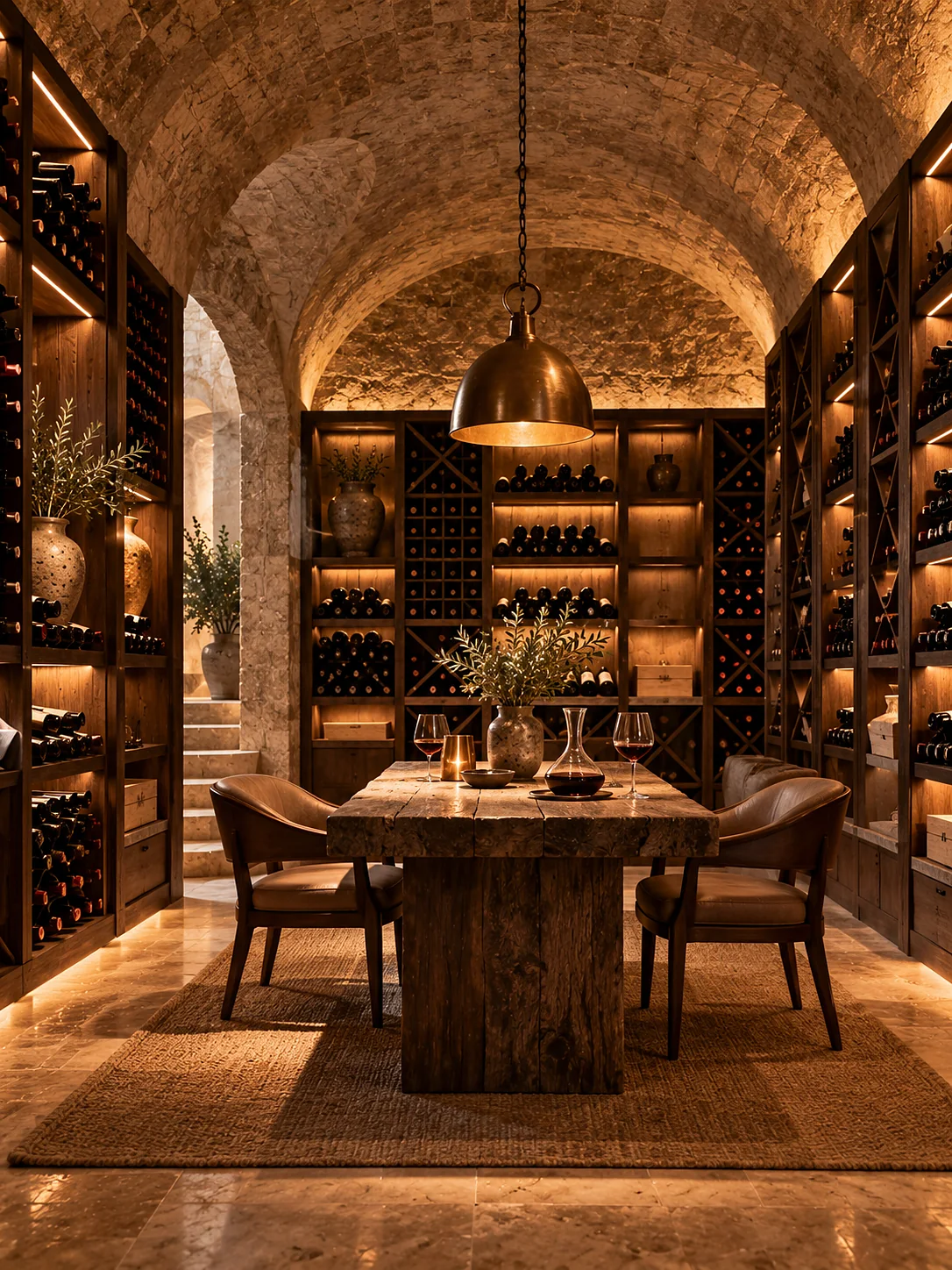
The cellar
640 references, 2.4 metres into the dune
The cellar is a vaulted room cut 2.4 m into the dune behind the bar, with 3 m of sand over the crown of the vault. It holds between 12 and 14 °C all year without mechanical cooling, which is the reason it is where it is rather than somewhere more convenient. 640 references, about 6 200 bottles. Twenty-six of them are open at any time — 20 by the glass and six drawn under argon — and that bench is what every other room on the estate pours by the glass from.
The list is weighted to where the building stands. 163 of the 281 reds and 99 of the 171 whites are Portuguese, and the parts of Portugal that get the most space are the nearest ones — Alentejo and Portalegre inland, Palmela and Setúbal to the north, and Colares, where ungrafted Ramisco still grows in sand that is not very different from the sand under this floor.
The sommelier's selection is six wines, changed every Thursday and poured in 75 ml measures as a flight of three or six. It is the least expensive way into the top of this list, and the board at the end of the counter carries what is open, the vintage, and the date each bottle was broached.
- References
- 640
- Bottles
- about 6 200
- Temperature
- 12–14 °C, unassisted
- Open now
- 20 by the glass, 6 under argon
Practical
Hours, seats and the rest of it
The things worth knowing before you sit down.
16:00 until 01:00, seven days a week, all year. The counter opens at 16:00; the terrace at 17:00, when the sun comes off it and the stone stops radiating.
The bar holds its hours in winter. From November to March the room is the one place on the estate that is busier after dark than before it.
Last orders on the terrace at 23:30, when the terrace closes under the estate's planning condition on outdoor noise. Last orders at the counter and in the room at 00:30, and the room is empty by 01:00.
A drink ordered at 00:30 is made at 00:30. Builds on this list run between nine and fifty seconds, so the last order of the night is the drink you actually asked for.
Children are welcome in the room and on the terrace until 19:00, and the six drinks on the zero-alcohol list are built for them as much as for anyone else — the tepache and the kombucha are the two most ordered drinks in the bar before seven o'clock.
After 19:00 the room is for guests of 18 and over. A Fig Leaf Milk Punch can be sent to a suite at any hour.
Dressed for the evening, which in this room means a linen shirt rather than a jacket: it is held at 22 °C all year, so nobody needs a layer they will spend the night taking off. Most people arrive from the beach or the water terraces at five and change before dinner at MIRANTE.
Swimwear belongs on the pool terraces rather than on an oxblood leather stool, and the bar will quietly offer a towel and a robe from the spa if you have misjudged it.
A third of the room — 16 of the 48 seats — is held for walk-ins until 21:00, which means that on most evenings you can arrive without warning and sit down. The other 32 can be reserved: the counter stools in pairs, and the room and terrace in parties of up to six.
Reserve through the concierge when you book your stay, at the desk once you arrive, or by writing to [email protected]. Counter stools go in the order they are asked for.
44 m² under a slatted maritime pine canopy, 12 seats, facing west over the second courtyard and the reflecting pool. The slats are set at 60 mm with a 40 mm gap, which puts the terrace in shade from 17:00 and in stripes for the hour before that.
Two gas heaters hold it at about 19 °C into late October. It closes at 23:30.
Larger groups are seated in the library next door, which takes 14 around one walnut table and has its own door onto the courtyard. The full list is poured there by a bartender assigned to the room for the evening, from a station set up inside it rather than carried through from the counter.
A minimum spend applies and is quoted in writing before the night. The library can also be taken for a tasting of the seven bays, poured in 15 ml measures.
Every spirit is jiggered to the millilitre. Stirred drinks are taken to a target temperature and dilution rather than to a count of turns; shaken drinks get 11 seconds with three 50 mm cubes. Glassware comes out of a cabinet at 2 °C.
If a drink arrives and it is not what you wanted, say so at the counter. It will be remade, and only one of the two reaches your bill.
One 12 kg block is cut each morning on the bench behind the counter into 50 mm cubes, 300 g columns for the highballs, and crushed. All three come from the same block, which is frozen directionally over 48 hours so that it is clear and free of trapped air.
The freezer well runs at −18 °C, so a cube reaches the glass at about −14 °C. That is the whole point: a cube that cold gives up its water slowly enough that the last mouthful of a rocks drink tastes like the first.
A tab can be opened at the counter against your room or a card, and settled at the end of the night or on departure, whichever suits you.
Service is included in every price on this page. Prices are indicative; the bay cards at the counter and the wine list brought to the table carry the current figures.
Anything on the cellar list can be sent to a suite or a villa terrace at the list price, with glassware, ice and a decanter where one is needed. Order at the counter before midnight.
A white or a sparkling travels in a cooler with two ice columns; a red travels at the 13 °C it left the cellar at and is carried, not wheeled, because a bottle that has lain still for six years should reach the terrace the same way. Either arrives within eight minutes.
A short counter list rather than a menu: olives from the Alentejo, almonds roasted in the morning and salted warm, whipped cod's roe with Barbela sourdough from LUMAR, hand-cut jamón, and oysters from the Sado estuary opened to order between October and April.
Anything from A CASA can be brought to a bar table until 23:00. Everything longer than those six items comes from that kitchen, which is why the counter list is short and all six of them are good.
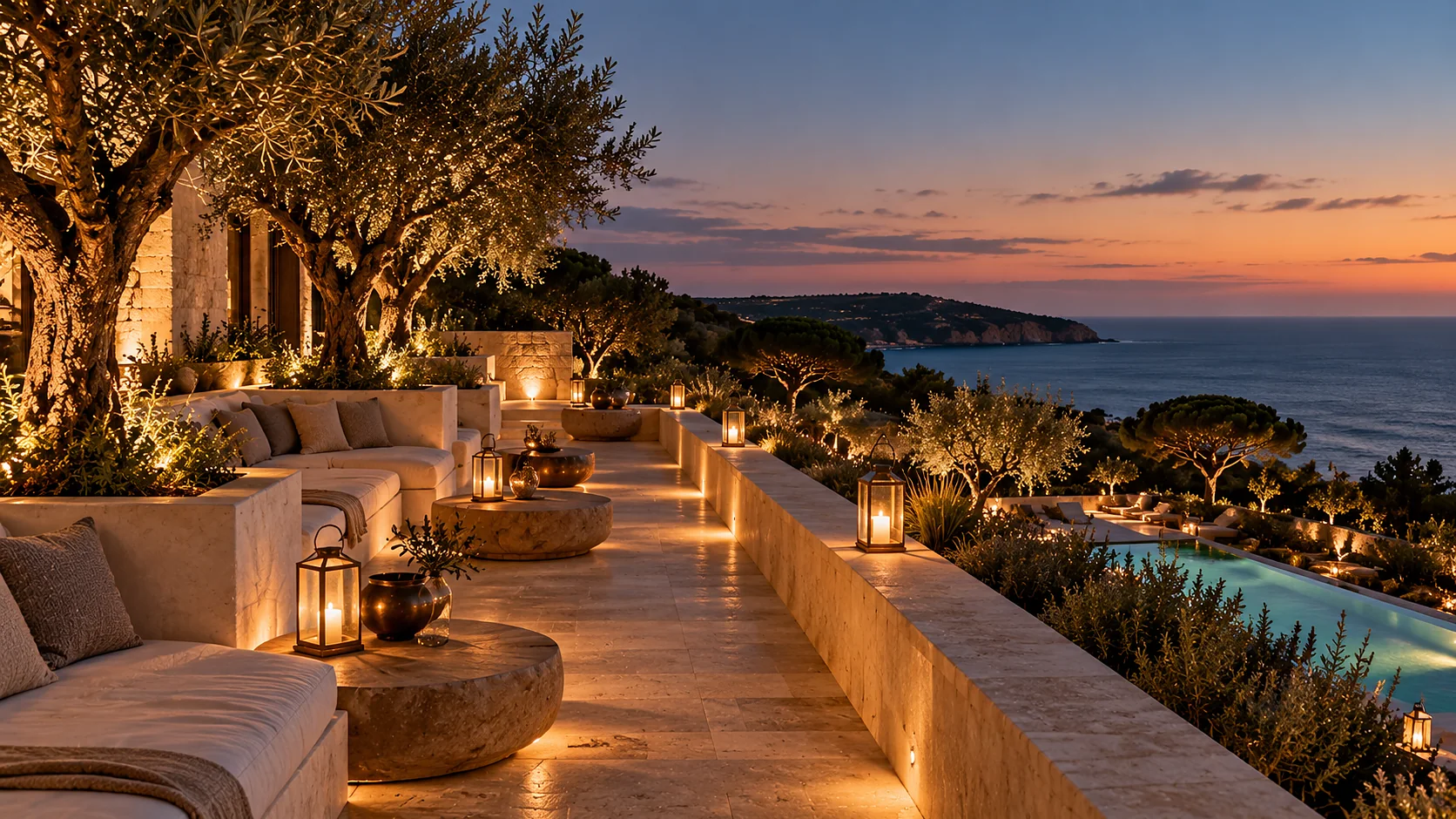
Sit at the counter
Fourteen stools, 11.4 metres of bronze, and a bartender close enough to ask what the fifth shelf of Bay 7 is for. Open at four, every day of the year.